
🚚 Same Day Delivery Available in Chennai! 🎉
Home
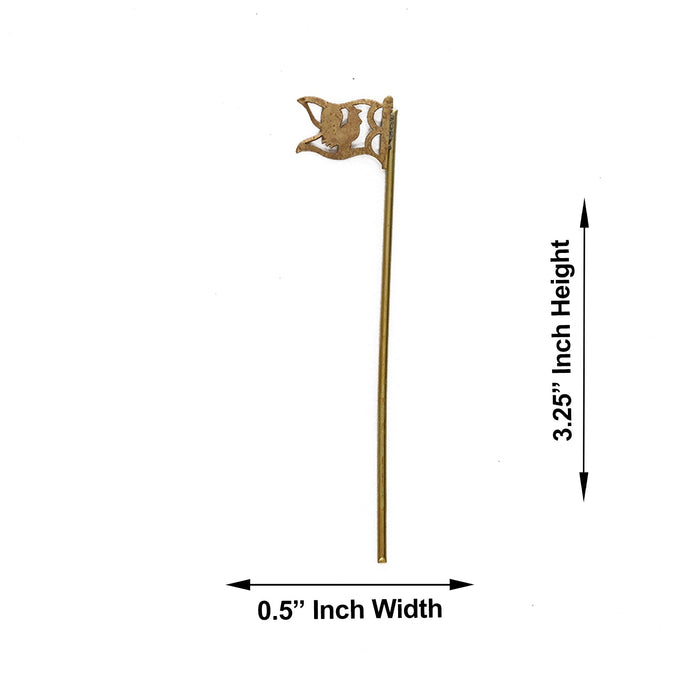
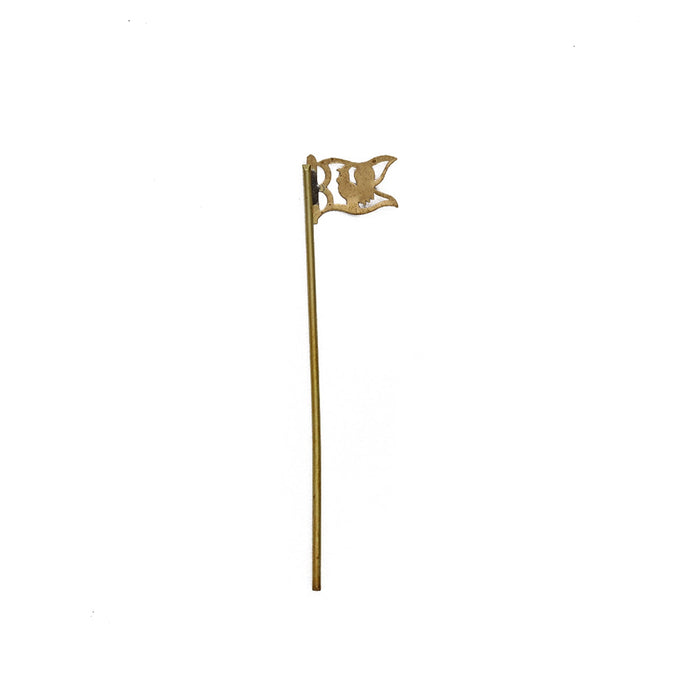
Brass Seval Kodi - 3.5 Inches | Murugan Seval Kodi/ Astras for Deity/ 5 Gms Approx
Availability:
70 in stock, ready to be shipped
Original price
Rs. 25.00
-
Original price
Rs. 25.00
Original price
Rs. 25.00
Rs. 25.00
-
Rs. 25.00
Current price
Rs. 25.00
| /
The Murugan Seval Kodi, a striking symbol of Lord Murugan's triumph over the asuras, holds a profound significance in Hindu Itihasa (referred to as Hindu mythology) and Tamil culture. Lord Murugan, also known as Kartikeya or Skanda, is revered as the God of War, Victory, and Wisdom. His exploits against the asuras, especially the defeat of the formidable Asura Soorapadman, are celebrated through various artifacts like the Seval Kodi.
This rooster Lord Murugan flag features the carving of the 'seval,' a unique emblematic representation. The 'seval' in the seval kodi is believed to originate from the sliced part of the mango tree where the asura Soorapadman was said to have concealed himself. The Seval Kodi serves as a visual reminder of Lord Murugan's valor and divine intervention, defeating the forces of evil.
The Brass seval kodi murugan is designed to be of a size that makes it ideal for placement alongside Murugan idols or images. It acts as a powerful visual aid, enabling devotees to connect with the rich folklore of Murugan's heroic deeds. The tales of his battles against asuras not only exemplify the triumph of good over evil but also symbolize the pursuit of wisdom, knowledge, and inner strength.
Lord Murugan, often depicted riding a peacock and wielding a divine lance, is a source of inspiration for seekers of courage, intelligence, and righteousness. By incorporating the Murugan Seval Kodi into their devotional practices, devotees honor the deity's enduring legacy and draw strength from his victorious spirit, reinforcing their own faith and determination on their life journeys. It stands as a powerful emblem of valor, faith, and triumph over adversity, echoing the enduring relevance of Lord Murugan in Hindu culture and spirituality.

(function () {
function blockQeTextInstant() {
const styleId = 'qetext-kill-style';
if (!document.getElementById(styleId)) {
const style = document.createElement('style');
style.id = styleId;
style.innerHTML = `
#qetext{
display:none !important;
visibility:hidden !important;
opacity:0 !important;
pointer-events:none !important;
position:absolute !important;
left:-9999px !important;
top:-9999px !important;
z-index:-9999 !important;
}
.audio-btn-row button {
transition: opacity 0.2s ease;
}
/* State: Stopped - Only Play allowed */
.audio-btn-row.st-stopped #pause,
.audio-btn-row.st-stopped #stop,
.audio-btn-row.st-stopped #resume,
/* State: Playing - Only Pause and Stop allowed */
.audio-btn-row.st-playing #play,
.audio-btn-row.st-playing #resume,
/* State: Paused - Only Resume allowed */
.audio-btn-row.st-paused #play,
.audio-btn-row.st-paused #pause,
.audio-btn-row.st-paused #stop {
opacity: 0.3 !important;
filter: grayscale(1);
cursor: not-allowed !important;
pointer-events: none !important;
}
`;
document.head.appendChild(style);
}
if (!window.qeObserver) {
window.qeObserver = new MutationObserver(() => {
const qe = document.querySelector('#qetext');
if (qe) {
qe.style.setProperty('display', 'none', 'important');
qe.style.visibility = "hidden";
qe.style.opacity = "0";
}
});
window.qeObserver.observe(document.body, {
childList: true,
subtree: true
});
}
}
function applyFix() {
if (!document.body.classList.contains('template-product')) return;
const container = document.querySelector('.buttons');
const target = document.querySelector('.product-main .product-details .single-product-meta');
if (!container || !target) return;
blockQeTextInstant();
const hide = container.querySelector('.hide_text');
const show = container.querySelector('.showtext');
if (hide) hide.remove();
if (show) show.remove();
if (target.nextElementSibling !== container) {
target.parentNode.insertBefore(container, target.nextSibling);
}
container.style.cssText = `
display:flex !important;
flex-direction:column !important;
align-items:flex-start !important;
gap:8px !important;
margin-top:12px !important;
padding:10px 14px !important;
background:#2e7d32 !important;
border-radius:6px !important;
width:fit-content !important;
`;
if (!container.querySelector('.audio-instruction')) {
const text = document.createElement('div');
text.className = "audio-instruction";
text.textContent = "Please click to listen to the audio of the description.";
text.style.cssText = `
color:#fff;
font-size:14px;
font-weight:500;
`;
container.prepend(text);
}
let btnWrapper = container.querySelector('.audio-btn-row');
if (!btnWrapper) {
btnWrapper = document.createElement('div');
btnWrapper.className = "audio-btn-row st-stopped";
btnWrapper.style.cssText = `
display:flex;
align-items:center;
gap:10px;
`;
container.querySelectorAll('button').forEach(btn => {
btn.style.cssText = `
display:flex;
align-items:center;
justify-content:center;
background:transparent;
border:none;
cursor:pointer;
padding:5px;
color:#fff;
`;
btnWrapper.appendChild(btn);
});
container.appendChild(btnWrapper);
}
container.querySelectorAll('svg').forEach(svg => {
svg.style.width = "16px";
svg.style.height = "16px";
});
const close = container.querySelector('.close_sbutton');
if (close && !close.dataset.done) {
close.onclick = () => container.style.display = "none";
close.dataset.done = "1";
}
// --- Button State Management ---
const play = document.getElementById('play');
const pause = document.getElementById('pause');
const stop = document.getElementById('stop');
const resume = document.getElementById('resume');
if (play && pause && stop && resume && btnWrapper) {
const setPlaying = () => {
btnWrapper.classList.remove('st-stopped', 'st-paused');
btnWrapper.classList.add('st-playing');
};
const setPaused = () => {
btnWrapper.classList.remove('st-stopped', 'st-playing');
btnWrapper.classList.add('st-paused');
};
const setStopped = () => {
btnWrapper.classList.remove('st-playing', 'st-paused');
btnWrapper.classList.add('st-stopped');
};
if (!play.dataset.listenersDone) {
// We change classes synchronously to avoid flicker
play.addEventListener('click', setPlaying);
resume.addEventListener('click', setPlaying);
pause.addEventListener('click', setPaused);
stop.addEventListener('click', setStopped);
// Interval to detect when audio ends naturally
// Original script calls handleEnd() which enables Play.
// We should sync our class when that happens.
setInterval(() => {
if (!play.disabled && btnWrapper.classList.contains('st-playing')) {
setStopped();
}
}, 1000);
play.dataset.listenersDone = "1";
}
}
}
let count = 0;
const interval = setInterval(() => {
applyFix();
if (++count > 40) clearInterval(interval);
}, 250);
const observer = new MutationObserver(() => applyFix());
observer.observe(document.body, {
childList: true,
subtree: true
});
})();
.template-index #start_button,
.template-collection #start_button,
.template-product #start_button,
body.template-index .buttons {
display: none !important;
}
.template-collection .buttons,
.template-product .buttons {
display: none !important;
}