
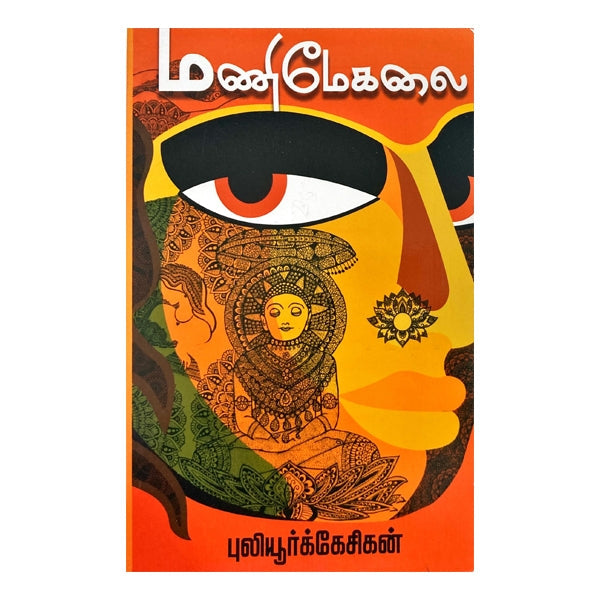
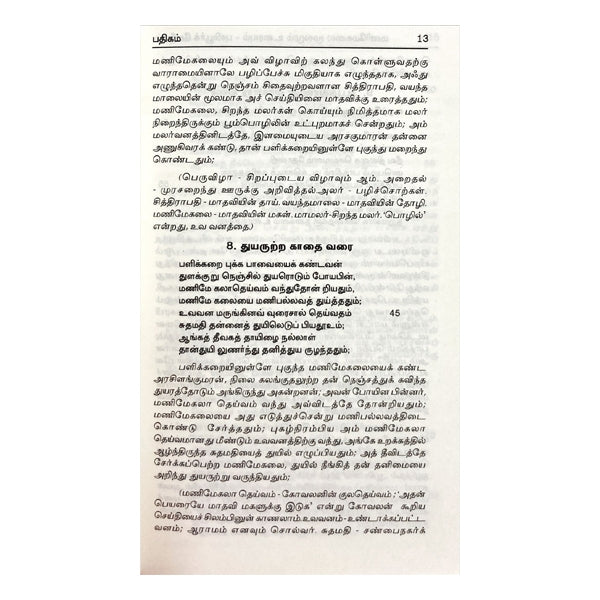
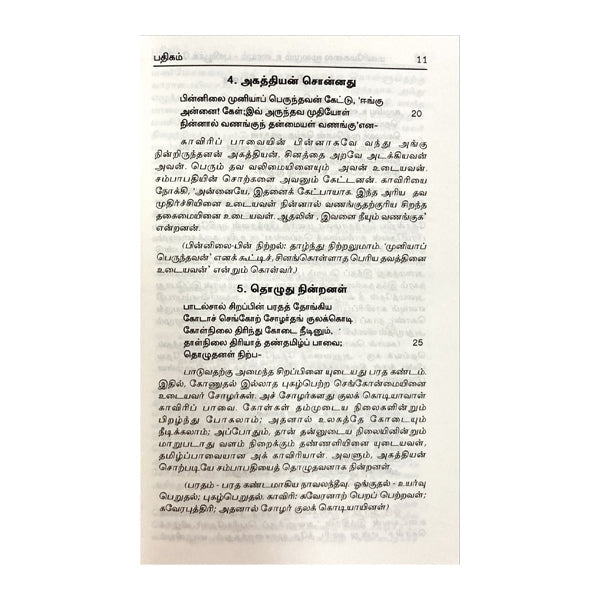
Manimegalai - Tamil | By Puliyur Kesikan/ Epic Book For Cultural Heritage, Academic Study And Classical Reading
About the Book: "Manimegalai" (Tamil)
• "Manimegalai" by Puliyur Kesikan is an important Tamil classical epic that introduces readers to one of the major works of ancient Tamil literature. The text combines storytelling, ethics, philosophy, religion, social ideas, and cultural details, making it valuable for students and readers interested in Tamil's literary heritage.
• This significant epic book follows the life and spiritual journey of Manimegalai, the daughter of Kovalan and Madhavi from Silappathikaram. The narrative moves from worldly life toward renunciation and explores themes of compassion, morality, impermanence, and spiritual seeking.
• Manimekalai is traditionally regarded as one of the Five Great Epics of Tamil literature, alongside Silappathikaram, Civaka Cintamani, Valayapathi, and Kundalakesi. Its Buddhist philosophical orientation gives it a distinctive place within Tamil literary history.
• The story centres on Manimegalai, who chooses a life of spiritual dedication rather than following the path of worldly love and royal life. Her journey introduces readers to ideas concerning compassion, charity, detachment, karma, and liberation.
• One of the meorable elements of the manimekalai narrative is the miraculous Amudha Surabhi, a vessel said to provide food without becoming empty. It becomes associated with Manimegalai's compassionate service and her commitment to relieving hunger.
• The epic also contains descriptions of ancient Tamil cities, social customs, religious traditions, philosophical debates, and different communities. These details make the work valuable not only as literature but also as a source for understanding aspects of the cultural world represented in classical Tamil texts.
• Another important feature is its discussion of Buddhist thought. The text includes philosophical ideas concerning karma, rebirth, suffering, ethical conduct, and the pursuit of liberation, giving readers insight into the presence of Buddhism in the Tamil region.
• Puliyur Kesikan was a respected Tamil scholar known for making classical Tamil works more accessible through explanations and commentary. His presentation can help readers approach the language, ideas, and literary context of this important text.
• This epic book can be particularly useful for students studying Tamil literature, classical texts, cultural history, or traditional Tamil philosophy. It can also appeal to general readers who want to discover one of the major works of Tamil literary heritage.
• The narrative contains elements of adventure, emotion, spirituality, philosophical discussion, and social observation. This combination makes Manimegalai considerably more than a conventional fictional tale.
• The story's emphasis on compassion and feeding the hungry remains one of its most memorable ethical dimensions. Manimegalai's spiritual journey is closely connected with the idea that service to living beings is an important expression of virtue.
• The work also provides an opportunity to compare different literary and philosophical perspectives found in classical Tamil literature. Its relationship to Silappathikaram is particularly important because several major characters and events are connected across the two epics.
• Readers can approach the manimekalai as both a literary narrative and a cultural document, appreciating its descriptions of ancient society while also examining its philosophical teachings.
• More than an ancient epic, Manimegalai represents an important part of Tamil's intellectual and literary heritage, preserving stories, ideas, cultural memories, and philosophical discussions from an earlier period.
• A valuable manimekalai edition for students, Tamil literature enthusiasts, researchers, and readers wishing to explore the classical Tamil epic tradition and its rich cultural and philosophical background.
Why Choose This Book?
• Presents one of the Five Great Epics of Tamil literature in an accessible Tamil edition.
• Introduces the life and spiritual journey of Manimegalai and her commitment to compassion and renunciation.
• Explores Buddhist philosophy, karma, rebirth, ethics, compassion, and liberation within a classical Tamil literary setting.
• Provides insights into ancient Tamil society, cities, customs, religious traditions, and philosophical thought.
• Suitable for students, researchers, Tamil literature enthusiasts, and readers interested in classical cultural heritage.
• Makes a valuable epic book for academic study, literary appreciation, and exploration of Tamil heritage.
• Offers an engaging way to discover the manimekalai tradition and its place within classical Tamil literature.
