🚚 Track My Order


Every year, as spring quietly moves in and the atmosphere begins to feel fresh once again, a new year dawns in many parts of India. On 19 March 2026, Thursday, the people of Andhra Pradesh, Telangana, Karnataka, and Maharashtra will usher in their new year.
In Andhra Pradesh and Telangana, it is known as Ugadi. In Karnataka, it is also known as Yugadi. In Maharashtra, it is marked as Gudi Padwa. Although it has different names, the essence remains the same. It is all about new beginnings, thankfulness, and looking forward to the coming year.
Let us learn about each festival in detail and also learn how nicely they are interlinked.
Ugadi Festival
Ugadi is celebrated in Andhra Pradesh and Telangana. The name “Ugadi” is derived from two Sanskrit words: “Yuga” meaning age and “Adi” meaning beginning. Thus, Ugadi means the beginning of a new age.
It is the first day of the Hindu lunar calendar’s Chaitra month. It is also believed that on this day, Lord Brahma created the universe. This is why it is so pious. Many people wake up early, take an oil bath, wear new clothes, and also adorn their homes with mango leaves and rangoli designs, and also visit temples.
One of the most significant aspects of Ugadi is listening to the Panchanga Sravanam. The Hindu calendar for the new year is read in temples or by priests. It contains forecasts about rainfall, farming, economy, and overall well-being for the year. People listen intently and pray for good fortune.
Ugadi Pachadi – The Taste of Life
No Ugadi celebration is complete without Ugadi Pachadi. This special dish is not just a meal. It has a lot of meaning.
Ugadi Pachadi consists of six different flavors prepared from neem flowers, jaggery, tamarind, raw mango, salt, and chilies. These six flavors symbolize six emotions of life: sadness, happiness, anger, fear, surprise, and disgust. The point is simple. Life will have all kinds of experiences. We should accept them all equally.
This small dish of pachadi holds a great lesson. Many senior citizens teach this to children during the festival. It becomes a great way to pass on lessons from one generation to another.
Gudi Padwa Festival
In Maharashtra, this day is celebrated as Gudi Padwa. The term “Padwa” stands for the first day of the lunar fortnight. “Gudi” symbolizes a flag or a symbol of victory.
On this day, people hoist a Gudi outside their homes. It is prepared using a bright silk cloth tied to a long bamboo stick. On top of it, a copper or silver pot is placed upside down. Neem leaves, mango leaves, and sugar strings are added to it. The Gudi is said to attract prosperity and keep evil away.
There are numerous legends and beliefs associated with Gudi Padwa. Some believe that it is the day of Lord Rama’s triumph when he returned to Ayodhya after defeating Ravana. Others believe that it is the day of the coronation of Chhatrapati Shivaji Maharaj. It also represents success in many households.
The Telugu New Year Importance
For Telugu communities, Ugadi is more than a festival. It is the beginning of the Telugu New Year. Every year has a particular name in a cycle of 60 years. This cycle repeats itself. This ancient practice has been going on for ages.
There is a huge rush at temples on this day. People perform special pujas for Lord Vishnu and Lord Rama. Many people start new businesses, sign new business deals, or start new plans on Ugadi. It is highly auspicious.
According to astrology, Ugadi marks the beginning of the Chaitra month. This month usually falls in March or April. It coincides with the onset of spring. This is the time when nature itself appears fresh and vibrant. Leaves appear on trees. Flowers bloom. It is as if it is the right time to start afresh.
How Are Ugadi and Gudi Padwa Related?
The roots may appear different, but they are the same. Both festivals are based on the Hindu lunisolar calendar. Both festivals fall on the same day: Chaitra Shukla Pratipada. This is the first day of the bright half of the Chaitra month.
Both festivals mark the beginning of the new year. Both festivals are based on positivity, victory, and new beginnings. Both festivals involve neem in some form. This represents health and protection. The use of mango leaves for decorations is also similar in both festivals.
The names are different, the foods are slightly different, and the way of celebration differs. But the religious significance is the same. It shows that India’s diversity is beautiful but also very much connected.
Similar Celebrations of New Year in Other Parts of India
Notably, the states in India celebrate their New Year at roughly the same time of the year. For instance, in Karnataka, it is Yugadi. In certain regions of North India, Chaitra Navratri marks the beginning of the New Year. In Maharashtra, it is Gudi Padwa. In Andhra and Telangana, it is Ugadi.
Each of these events is associated with the lunar calendar and the onset of spring. Agriculture is also an important factor. The farmers regard this time of the year as significant for the agricultural cycles and changes in seasons.
This goes to show how much the Indian festivals are attuned to nature, astronomy, and traditional methods of time calculation. Our forefathers were meticulous in observing the sky, the phases of the moon, and the seasons to create the calendar system.
Rituals and Practices Observed on This Day
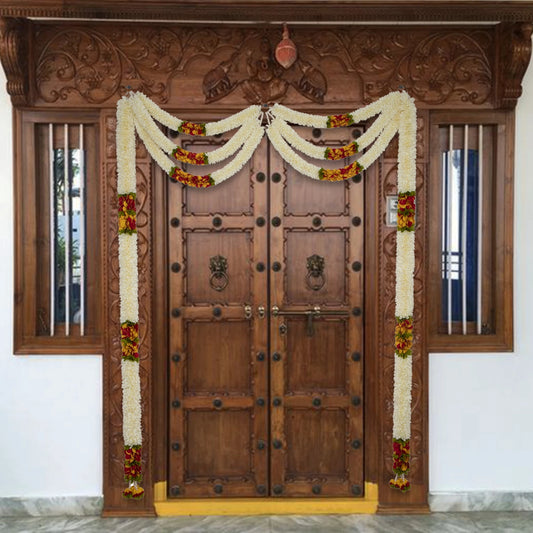
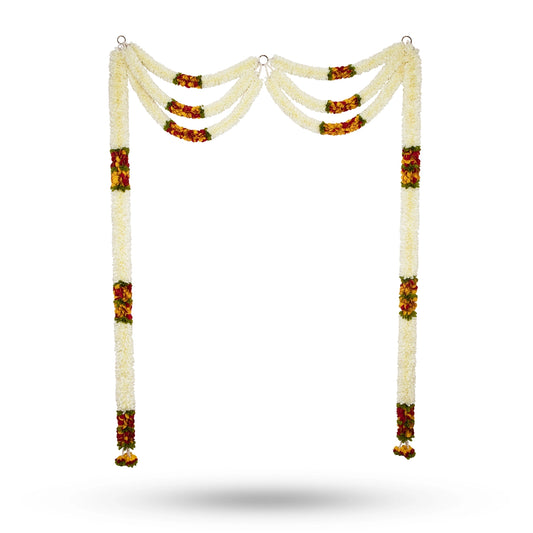
The day begins with Abhyanga Snanam, which is an oil bath. People thoroughly clean their homes before celebrating the festival. The doorways are adorned with mango leaf torans. Rangoli or muggu designs are made outside the house.
In Maharashtra, people assemble around the Gudi to perform puja. In Andhra and Telangana, people assemble to listen to the reading of Panchangam. Special foods are prepared. Puran Poli is a common dish in Maharashtra, while Pulihora, Bobbatlu, and Ugadi Pachadi are popular in Telugu households.
People also donate food, clothes, or money on this day. It is believed to be good karma to begin the year with charity. Some people also write down their goals and resolutions for the year.
The Significance of These Festivals
But at the core of Ugadi and Gudi Padwa, there is a very simple message. Every year brings us a fresh start. Whatever happened in the last year, we get a chance to start again with hope.
The six tastes of Ugadi Pachadi teach us that life is never one-sided. The hoisted Gudi teaches us that victory is possible after struggle. The Panchangam teaches us that time never stops moving, and we have to move with it.
In today’s busy schedule, these festivals help us take a break. They help us bond with our families. They help us connect with our roots. And to be honest, that’s something very special.
Welcoming the New Year
On this day, millions of people will celebrate this wonderful new beginning. Whether it is Ugadi, Gudi Padwa, or Telugu New Year, the happiness is the same. If you are celebrating, take a moment to understand the significance of the celebrations. Savor the pachadi. Gaze at the Gudi. Listen to the Panchangam.
The New Year is not just a date change. It is a mindset change. And perhaps, this year, we can take more patience, more kindness, and more strength with us. Wishing you and your family a very happy and prosperous New Year. May this Ugadi and Gudi Padwa bring health, happiness, and success into your life.