🚚 Track My Order


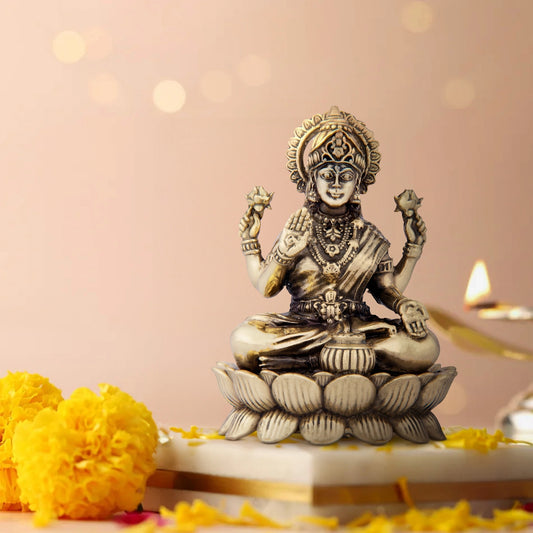
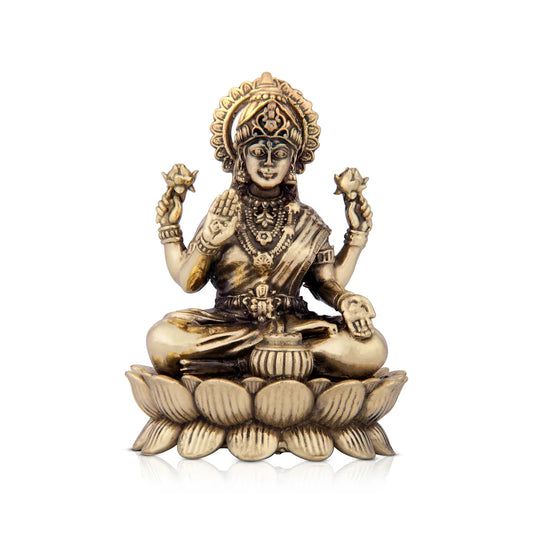
Sheetla Ashtami, also called Sheetla Ashtami or Basoda, is a Hindu festival celebrated in honor of Goddess Sheetala, the Hindu deity of health. The word “Sheetla” itself is very indicative of the true essence of the festival. The word “Sheetla” stands for coolness. Thus, the festival of Sheetla Ashtmi itself speaks of coolness, soothing the body, cooling the system, and seeking refuge from all diseases.
The festival of Sheetla Ashtmi falls on the eighth day of Krishna Paksha in the Hindu month of Chaitra, just after the festival of Holi. The festival is celebrated with great fervor in all the states of Northern India, namely Rajasthan, Gujarat, and Uttar Pradesh.
Who is Goddess Sheetala?
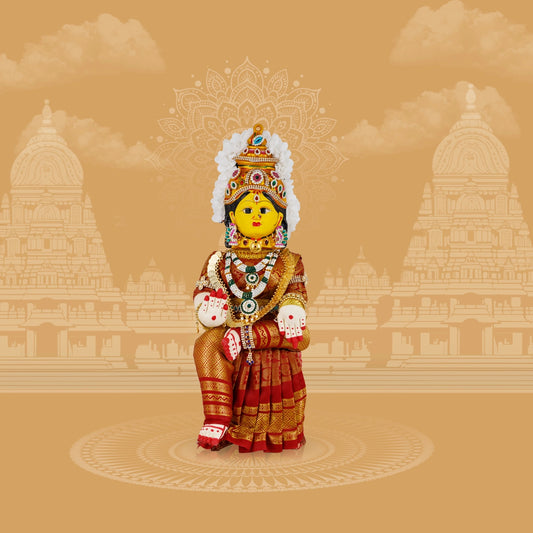
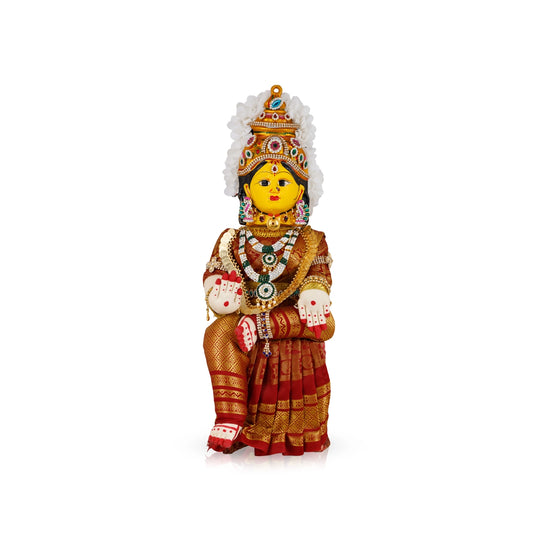
Goddess Sheetala is revered in Hindu tradition for her power to protect her followers from all infectious diseases. In the past, she was also revered for her power to protect her followers from smallpox. The followers of Hindu tradition used to pray to Goddess Sheetala before the advent of medical science. Goddess Sheetala rides a Donkey. The broom, pot of water, neem leaves, and winnowing fan in her hands also have great significance.
The broom stands for cleanliness. The pot of water stands for coolness. Neem leaves also stand for coolness. Thus, the entire imagery of Goddess Sheetala stands for coolness, hygiene, and purity.
Why Is Only Cold Food Offered?
One of the most unique traditions of Sheetla Ashtami is that no new food is prepared on this day. People make their food one day prior to the event and offer stale food to the goddess. This tradition is known as “Basoda,” which means to cool.
On the day of the event, people wake up early, make food such as poori, halwa, rabri, rice, and curd, and visit the temple with the prepared food. After offering the food to the goddess, they eat the same food as prasad. This tradition was followed to rest the fire of the kitchen and allow the body to cool down after the heat of Holi.
Some people believe that this tradition was also followed because of health benefits. It was a change of season, from winter to summer, and people used to face digestion problems. Eating cold food for a day could provide health benefits. This shows that traditions were followed with proper thought, although we are unaware of this fact.
Rituals and Observances
On the morning of Sheetla Ashtmi, women wake up early, take a bath before sunrise, and then clean their houses. They also visit the temple of Sheetla. Special fairs are also held near Sheetla Mata temples, especially in villages. People offer water, turmeric, kumkum, flowers, and the prepared cold food.
Neem leaves are also very important during this event. People hang neem leaves at the entrance of their homes. Some people also keep neem leaves near the beds of their children, praying for their health.
The mother especially prays for her children. The emotional aspect of the festival is very high. If you look at the women standing with folded hands and closed eyes, you can feel the emotion. It’s not about decorations or anything. It’s just emotion.
The Connection to Health and Hygiene
Sheetla Ashtmi is imparting a very practical lesson. The importance of cleanliness and cooling is something that has to be appreciated. Many years ago, diseases like smallpox would break out. The common man may not have known about viruses, but he would have known about hygiene.
The broom that is held by the goddess is to remind us to keep our surroundings clean. The neem leaves used are antibacterial. The fire that was kept for a day would reduce the smoke and heat that would be present within our homes.
All of this is working together to give us a better understanding of how to keep ourselves healthy. We have our hospitals and medicines, and that is a blessing. The message that is being imparted is important. We must respect our bodies. We must keep our surroundings clean. We must pray and give thanks. Sometimes, even ancient history is relevant to our modern lives.
Regional Celebrations of Sheetla Ashtmi
Sheetla Ashtami is celebrated with much fervor and gaiety in Rajasthan. On this day, large congregations are held at Sheetla Mata temples. It is also called “Basoda” in Gujarat, and on this day, families strictly adhere to the no-cooking rule. The people of Uttar Pradesh and Madhya Pradesh believe that by worshipping this goddess, they can save themselves from diseases like skin infections and fever. Even in parts of Haryana and Delhi, you can see long queues of people waiting to seek blessings from this goddess.
Though the rituals may vary slightly, the feeling remains the same. Devotion, health, and family.
Spiritual Significance of Sheetla Ashtami Festival
There is a lot more to this festival, which is beyond the rituals. Heat is said to represent things like anger, ego, and restlessness. Cool, on the other hand, symbolizes calm, patience, and equilibrium. By worshipping the goddess of cool, people are also seeking calm.
After the high-energy celebration of Holi, this festival is like a breather. It is as if the body and mind are being told to slow down. Rest. Reflect. Reset.
Sheetla Ashtmi may look like an ordinary festival. No lights. No music. Just cold food and calm prayers. But sometimes, the simplest of things can hold the deepest of meanings.
At the end of the day, this festival teaches us that health is wealth. Faith gives strength. And little things can keep us protected, though we may not know how. And that, perhaps, is the beauty of our traditions.